
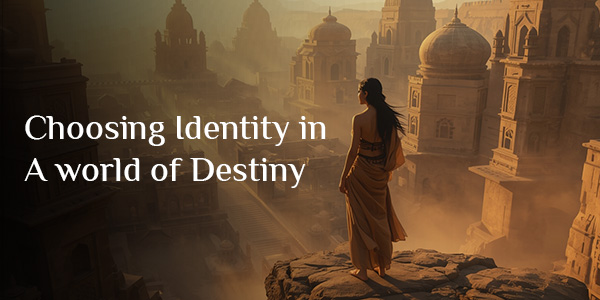
The Rise of Miraj takes the readers to a fantasy world that seems both primordial and all too familiar at the same time, with its roots in lore but with its point of reference being issues of contemporary identity. Allaadin is the main character of this trip, and her very name implies expectations and history and assumptions she did not decide to make herself. At the outset, the novel welcomes the readers to experience a novel in which fate is not exactly inherited, but challenged, opposed, and eventually redefined. The book is a journal of lyrical prose and emotionally-based narratives dealing with what it takes to become oneself when one is at the crossroads of love, loyalty, and personal truth.
The trip of Allaadin is not only the magic or the myth, but the self-recognition. She works under the burden of a name that reverberates through history and creates the picture of her in the eyes of other people before she even has a chance to establish herself. This fight is a human experience across the board, and especially for those who are dealing with cultural heritage and cultural inheritance. In Miraj – The Rise, destiny is introduced as a strong force; however, not a force that cannot be broken. The novel poses the question of whether fate is predetermined or can be changed with the help of bravery, decision, and inner power.
The relationship is another interesting feature of the novel. Vicious friendships, blossoming relationships, and tested loyalties develop as the emotional foundation of the story. These links do not play the role of decorative subplots; they are the fires that infuse the development of Allaadin. The love described in this story is sweet, but it is also very demanding, providing people with comfort and, at the same time, making them address their fears and values. Loyalty is represented as tricky and even painful, which makes readers remember that often one should be loyal to themselves before they can be loyal to others.
The fantasy realm of Miraj is highly fantasized, having strong antiquity, and the vibrations of modernity. The story is subtly worked through cultural depth, bringing the setting a certain depth and foundation without sending the emotional arc into overload. This equilibrium enables the readers of any origin to find a reflection in the story. The world-building is not intrusive but complementary to the story, as it gives room to introspection, identity, and emotional connection to assume the center stage.
There is a strong feeling of silent strength behind the novel. Allaadin is not characterized by loud heroic gestures and unchallenged power, but by endurance, thought, and determination. Her strength is revealed in a slow manner, as defined by tough choices and moments of weakness. This depiction breaks the archetypes of conventional fantasy and provides a more subtle idea of rising. To make a decision about the story that one chooses, and this, as the novel insinuates, is a brave thing to do, and it mostly occurs in silence before one is noticed by the world.
The Rise of Miraj is more or less reminiscent of the principles of its author, Elizabeth Hassan. Being a South Asian author whose academic history involves English and business administration, Elizabeth offers her narration, both emotional and thought-provoking. Her assumptions about love being the most exquisite form of life are interwoven in the story, not as an abstract, but as an experience that makes decisions and fates. The love in the novel is redefining, overwhelming with its intensity, and extensive in its coverage.
Another central element of the worldview of the story is gratitude. Instead of being conveyed in high-flying speeches, gratitude is manifested in honesty, sincerity, and respecting of relationships. This goes with the fact that Elizabeth believes that the act of gratitude is an act, a practice of cultivating peace in a hostile world. The novel takes a moment to recognize the moments of connection, growth, and understanding, and reminds the reader of the silent good that is still present despite conflict and uncertainty.
Miraj – The Rise turns out to be a story of choice. It is the respect of your origin and, at the same time, not being bound down to where you belong. It is all about embracing love, being loyal, and being trustworthy without losing oneself in the process. This book offers a rich and touching experience to readers who want to be educated and entertained in a way that addresses real-life inner conflicts with a fantasy. It not only challenges the reader to observe how Allaadin was given prominence, but it also challenges the reader to look at his or her own self.
To the readers of a site, the Miraj – The Rise is not merely that fantasy novel, but a call to a collective human experience. The fact that Elizabeth Hassan aims to unite the communities with the help of diversity and inclusion can be seen in the openness and emotional availability of the story. The characters represent individuals of various classes who could not find meaning and belonging, and unite.
This feeling of inclusivity enables the book to transcend the borders of genres and to reach those readers who appreciate the power of introspection in the same way as they appreciate the power of imagination. In a world where too many people are a two-step ahead without stopping to think, the softly spoken Miraj – The Rise is a request to the readers to find a moment to stop, reflect, and think about the strength of gratitude, love, and self-identified purpose as the most genuine rise. It is something that lingers and stays thoughtfully long after the final page is read by the readers.